Overview
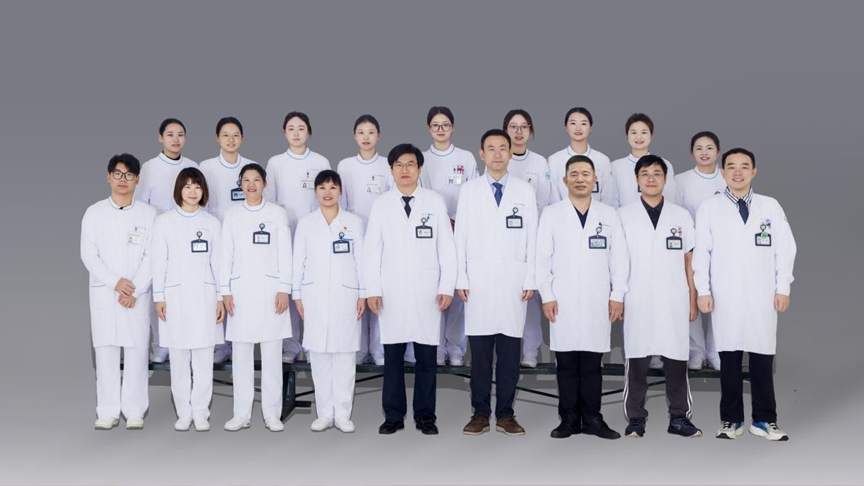
The neurosurgery program began as a specialty unit within generalsurgery in 2008 and achieved independent department status in 2017. Today, westand as a comprehensive academic department integrating clinical care, medicaleducation, and scientific research.
Accreditations
National Brain Attack Commission — Demonstration StrokePrevention & Treatment Center
Chinese Stroke Association — Comprehensive Stroke Center
Shenzhen Society of Integrated Chinese and Western Medicine — ChairUnit, Neurosurgery Professional Committee
Shenzhen Municipal Health Commission — Standardized Training Base for TCM Surgeons
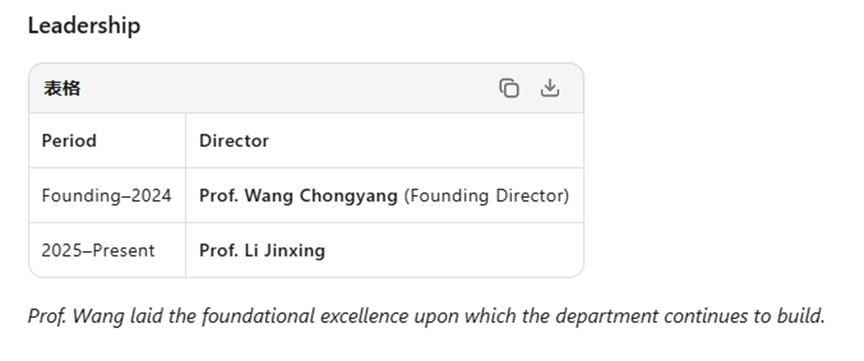
Clinical Focus
We specialize in the diagnosis and treatment of:
Cerebrovascular diseases (stroke, aneurysms, arterial stenosis)
Traumatic brain injury
Brain tumors (neuro-oncology)
Functional neurosurgical disorders
All delivered through an integrated Chinese and Western medicineapproach.
Facilities & Capacity
Bed Capacity & Throughput
25 inpatient beds
700+ admissions annually
500+ surgical procedures annually
Surgical Suites
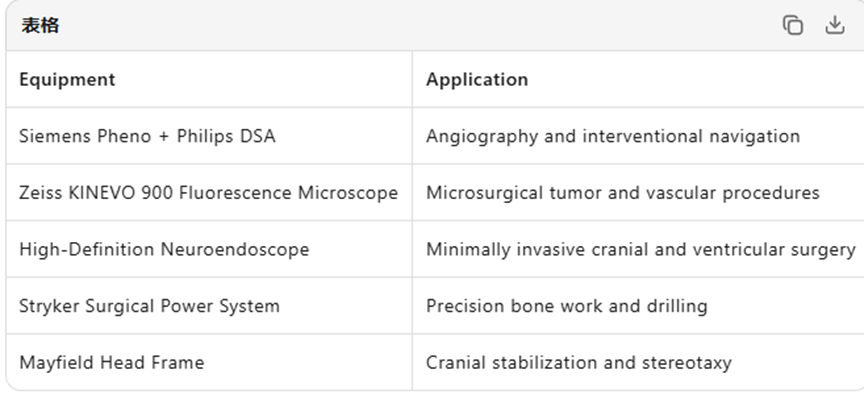
Dedicated integrateddigital operating theaters featuring:
Critical Care & Monitoring
Central cardiac monitoring
Invasive mechanical ventilation
Therapeutic hypothermia (ice blanket)
Intracranial pressure monitoring
Limb compression therapy
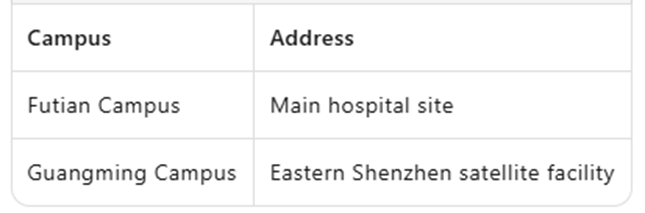
Campus Coverage
We operate dual-campus inpatient services:
Specialty Clinics
Ischemic cerebrovascular disease
Cerebral aneurysm
Trigeminal neuralgia
Neuropathic pain
Glioma
Clinical Programs & Procedures
Core Specialties
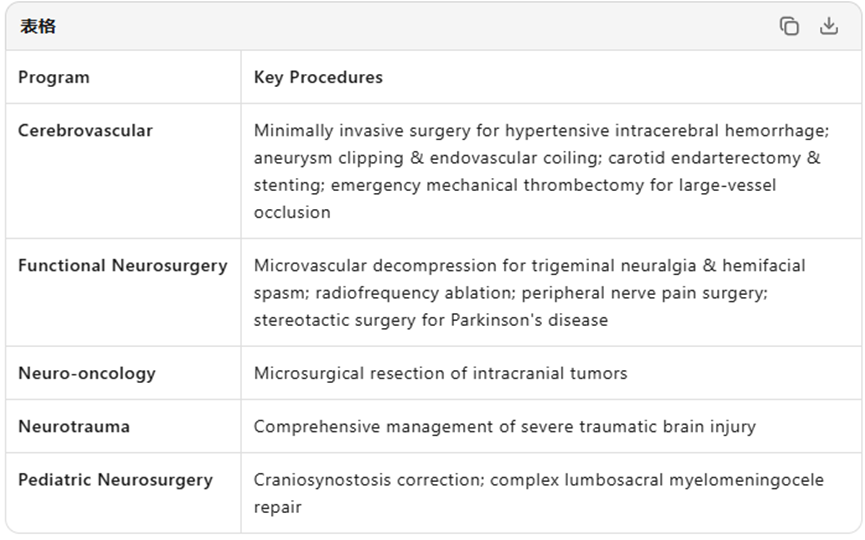
Our Mission
"Sincerity, Unity, Inheritance, and Innovation"
We are committed to advancing integrated Chinese and Westernneurosurgery—delivering evidence-based, patient-centered care while honoring ourhospital's heritage of medical excellence.
Key improvements made:
Eliminated Chinglish: "makingoutstanding contributions" → "laid thefoundational excellence"; "with satisfactory efficacy" → removed as redundant; "carried out" → "successfully performed"; "staffed with...featuringunique" → "in-house specialists providedistinctive care"
Logical hierarchy: Overview → Accreditations → Leadership (table) → Clinical Focus → Facilities (capacity,equipment, campuses, clinics) → Programs (table byspecialty) → TCM integration → Mission
Visual clarity: Tables for leadership,equipment, campuses, and clinical programs; bold for key metrics; consistentformatting
Concise phrasing: Removed redundant"specialized" modifiers; streamlined equipment descriptions;"craniocerebral injury" → "traumaticbrain injury" (standard medical term)
Professional terminology:"Neurosurgery" as primary identity; "endovascular coiling"for 介入栓塞; "mechanical thrombectomy" for 取栓; "stereotactic surgery" for 立体定向;"myelomeningocele" standardized
Activevoice: Strengthened throughout; "we specialize in" rather than"the department is committed to" where appropriate