Department History
The Reproductive Health Department was established in 2017.
Department Honors
The department has partnered with Peking University Shenzhen Hospital toestablish the Shenzhen Reproductive Medicine Specialty Alliance.
Department Leadership
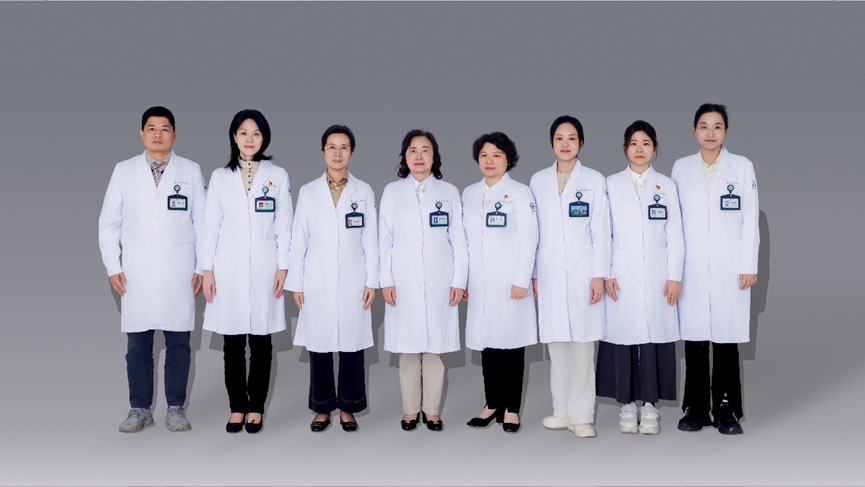
The department was founded and initially led by Director Cao Danong, recognizedas a “Guangdong Excellent TCM Clinical Talent,” who served as AdministrativeDirector from 2017. In 2018, Professor Zheng Yuehui, a Shenzhen Local LeadingTalent, joined as Academic Leader.
Since December 2024, Director Qiu Li hasbeen leading the department.
Research Focus
The department is dedicated to the integrated diagnosis and treatment of femalereproductive system diseases using both Traditional Chinese Medicine (TCM) andWestern medicine. Key areas of focus include female infertility, polycysticovary syndrome, endometriosis, diminished ovarian reserve, threatenedmiscarriage, recurrent spontaneous abortion, TCM applications in assistedreproductive technology, and perimenopausal syndrome. The department alsoengages in scientific research and teaching in these fields.
Department Operations
The department operates across two campuses: Futian and Guangming. Our teamincludes:
1 GuangdongExcellent TCM Clinical Talent
3 Professors
1 DoctoralSupervisor
2 Master’sSupervisors
4 ChiefPhysicians
4 AttendingPhysicians
4 PhDs and 2Master’s degree holders
We offerspecialized clinics, such as:
Expert SpecialClinic
FertilityEvaluation and Pregnancy Preparation Guidance
Infertility
PrematureOvarian Failure
Endometriosis
PolycysticOvary Syndrome
TCMConditioning for Assisted Reproductive Technology
Adolescentand Perimenopausal Diseases
To fullyleverage the strengths of TCM, the department has developed proprietary herbalointments and preparations, including Wenjing Jiankun Ointment and WentongPowder. The department has led seven research projects at various levels,including those funded by the National Natural Science Foundation of China(NSFC) and the Provincial Administration of Traditional Chinese Medicine. Ourteam has published 34 high-impact papers, including 15 indexed in SCI.
Following the“Three Alls” service philosophy — all for patients, for all patients, and foreverything of patients — the department adheres to TCM’s holistic approach andsyndrome differentiation. Grounded in the “Chong-Ren Theory” from the NeiJing (Inner Canon of Huangdi), we emphasize the vital role of theliver, spleen, and kidneys in female physiology and pathology, aiming toachieve a dynamic balance in uterine storage and discharge. By integratingtraditional TCM with modern reproductive medicine, we have developed aneffective and TCM-featured “disease-syndrome-evidence-based” diagnosis andtreatment system.