1. History
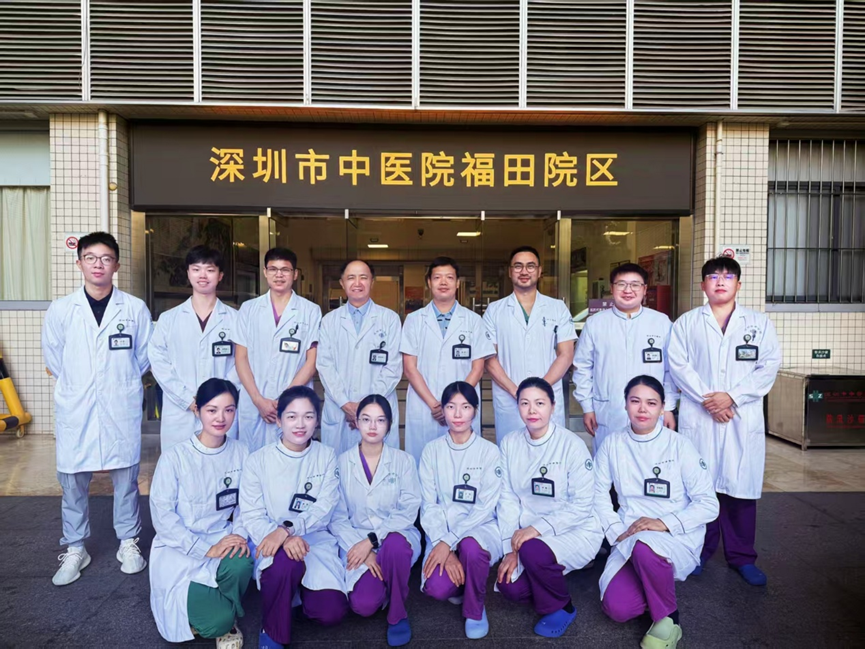
Founded in 2004, the Department of Interventional Radiology wasestablished by Professor Xie Zonggui, who continues to serve as itsadministrative director.
2. Honors & Standing
We serve as Vice-Chairman Unit of the Interventional Diagnosis andTreatment Professional Committee, Shenzhen Medical Association. Over twodecades, we have built a reputation for patient-centered care, rigoroustechnical standards, and steady quality improvement, establishing minimallyinvasive therapy as our signature strength. The department has accumulatedextensive experience in oncologic intervention, vascular disease management,and emergency rescue, consistently delivering successful outcomes in complex,high-risk procedures. Our growing regional academic influence is supported by 3provincial- and municipal-level research grants and >10 publications inSCI-indexed and Chinese core journals.
3. Clinical Focus
Our practice centers on image-guided minimally invasive diagnosisand treatment, with expertise across four domains:
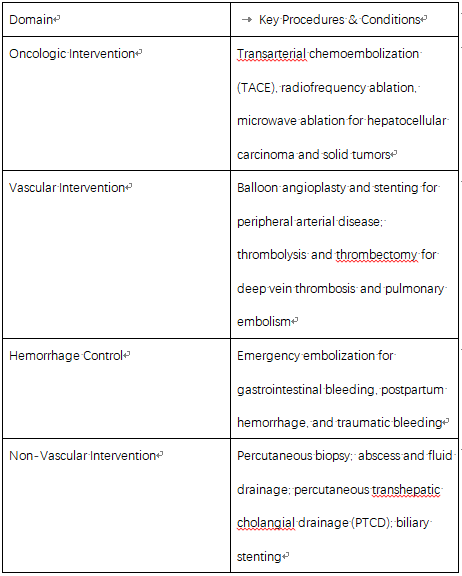
We also actively explore new interventional materials and devices,imaging protocol optimization, and complication prevention strategies tocontinuously advance patient outcomes.
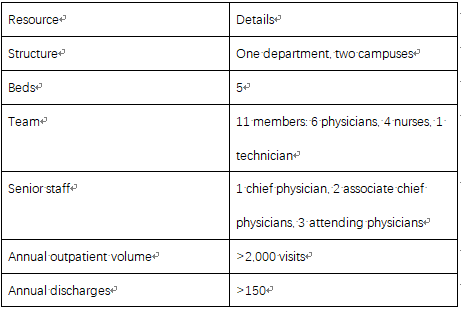
4. Operations & Capacity
5. Clinical Services
Oncology
We routinely perform TACE, radiofrequency ablation, and microwaveablation, integrating these modalities into comprehensive treatment plans forhepatocellular carcinoma and diverse solid tumors.
Vascular Disease
Our endovascular capabilities include balloon dilatation and stentimplantation for peripheral arterial stenosis or occlusion, as well as advancedthrombolysis and mechanical thrombectomy for lower-extremity deep veinthrombosis and pulmonary embolism.
Emergency Intervention
We provide rapid-response embolization for life-threateninghemorrhage—gastrointestinal,postpartum, and traumatic—markedly improving salvagerates in critical scenarios.
Non-Vascular Procedures
We offer percutaneous biopsy, drainage of abscesses and effusions,PTCD, and biliary stent placement, delivering essential support formultidisciplinary care.
6. Multidisciplinary Collaboration
We maintain close multidisciplinary team (MDT) partnerships withoncology, hepatobiliary surgery, and diagnostic imaging to developindividualized, evidence-based treatment strategies for every patient.
7. Quality & Safety
We continuously adopt emerging technologies and materials, refineclinical workflows, and strengthen perioperative management and complicationsurveillance. Our cohesive team combines solid foundational training withstandardized protocols, enabling us to undertake complex, high-riskinterventions with confidence. The department operates with clinical stabilityand a relentless focus on quality improvement, cultivating a discipline-wideculture of minimally invasive, safe, and efficient care.
Key revisions for international readability:
Concise opening — Founder and founding year stated upfront; eliminated repetitive"Department Honors" preamble.
Table-based focus areas — Four clinical domains presented in scannableformat rather than dense prose.
Operations separated from services — Capacity metrics (beds, staff, volumes)isolated from clinical narrative for clarity.
Eliminated redundancy — Original text repeated "image-guidedminimally invasive diagnosis and treatment" three times; consolidated intomission statement and domain headers.
Active voice & tighter syntax — "Successfully completed manycomplex...operations with good clinical efficacy" → "consistently delivering successful outcomes in complex,high-risk procedures."
Removed institutional filler — Phrases like "overall business runssmoothly" and "discipline development model" replaced withconcrete quality commitments.