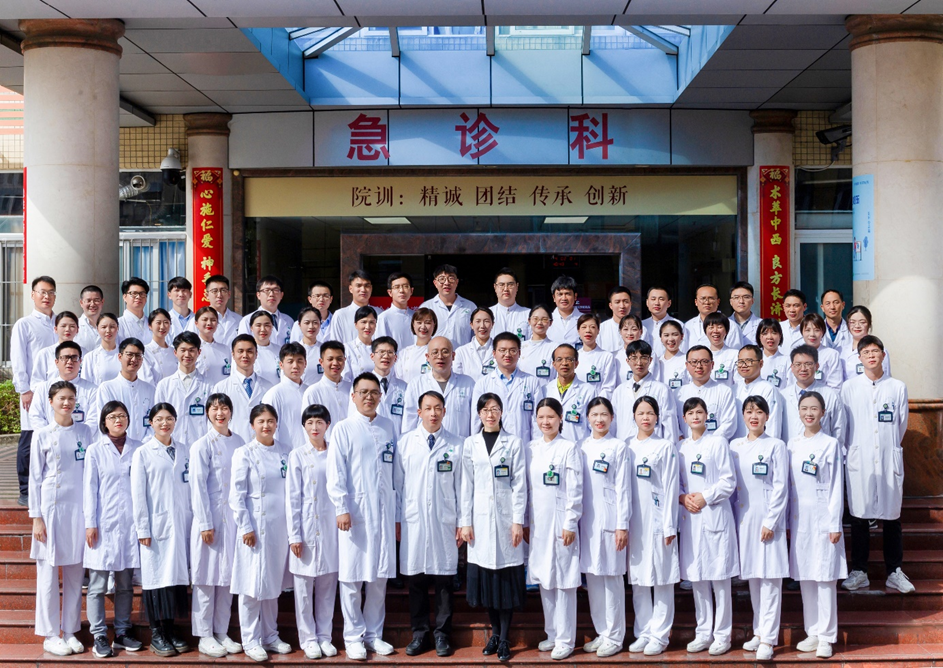
Established in 1981, the Emergency Department has evolvedover four decades from a single first-aid unit into a comprehensive, full-cycleemergency medical system. Today, it integrates pre-hospitalemergency care, snake injury medicine, emergency diagnosis and treatment, EICUintensive care, and TCM classical ward therapy — forming aseamless continuum from acute rescue through recovery. As the regional hub forTCM-based emergency medicine, the department pioneered the development of:
ShenzhenEmergency Medical Rescue Base
ShenzhenPoisoning Medical Treatment Base
ShenzhenFirst Aid Training Base
This creates a unique "Rescue—Treatment—Training—Protection" full-chain service model, driving the deep integration of TCM emergencymedicine with modern critical care and maintaining leadership in disciplinarydevelopment.
2. Honors & Accreditations
Department-Level Designations:
Key TCM Specialtyof Guangdong Province
Vice-ChairmanUnit, National TCMClassical Ward Alliance
TCM SpecialistNurse Training Base
Snake Injury Unit (Secondary Specialty):
Shenzhen TCMCharacteristic Specialty
Guangdong-HongKong-Macao Snake Injury Diagnosis and Treatment Center (approved 2023)
Functional Bases:
Shenzhen EmergencyTraining Base
Shenzhen Poisoning Treatment Base
These facilities have significantly enhanced standardizedemergency training capabilities and poisoning critical care efficacy.
3. Leadership
Academic Leader:
Prof. ZengZhongyi, Chief Physician —Shenzhen Famous TCM Doctor; Chairman, Emergency Medicine ProfessionalCommittee, Shenzhen Association of Traditional Chinese Medicine. A pioneer inTCM emergency medicine, snake injury rescue, and poisoning treatment, drivingthe standardization of emergency techniques.
Department Director:
Prof. LiuYuxiang, Chief Physician —Shenzhen Outstanding TCM Doctor; Pengcheng Qihuang Project Leading Talent in TCM; Guangdong Provincial ModelWorker; Expert, National TCM Quality Control Center(Emergency and Critical Care Medicine).
4. Clinical Scope & Research
Core Philosophy: Guided by TCM classical theory in the management of acute and critical illnesses.
Dominant Diseases & Conditions:
Epidemic infectiousdiseases
Venomous snakebites
Sepsis
Cardiovascular andcerebrovascular emergencies
Acute pancreatitis
Severe pneumonia
Strategic Focus:
Developingreplicable integrated TCM-Westernmedicine diagnosis and treatment protocols
Optimizing poisoning critical care clinicalpathways
Perfectingemergency training systems
Driving synergisticdevelopment of TCM emergency medicine, critical care, and rescue training
5. Clinical Operations & Capacity
Clinical Units:
Pre-hospitalEmergency Care Unit
Emergency Internal Medicine/ Surgery / Pediatrics / Gynecology
General OutpatientClinic
Resuscitation Room
EICU (Emergency Intensive Care Unit)
TCM Classical Ward
Snake InjurySpecialty Ward
Capacity:
100 beds
90+ medical staff, including:
20 SeniorProfessionals (Associate Chief/ Chief Physician level)
2 ShenzhenFamous/Outstanding TCM Doctors
2 Shenzhen FamousTCM Expert Inheritance Mentors
1 Pengcheng Qihuang Project Leading Talent in TCM
2 Pengcheng Qihuang Project Outstanding TCM Talents
1 OverseasHigh-Level Talent
4 Master'sSupervisors
Full complement ofspecialist nurses and case managers
Annual Clinical Volume:
Emergencyvisits: ~150,000
Inpatientadmissions: ~2,000
Emergencyrescues: 3,000+
IntegratedTCM-WM rescue success rate: >98%
Snake Injury Unit (established 1990):
30,000+ venomous snake bite cases treated using integratedTCM-WM approaches combining internal medicine and external therapy, acupunctureand herbal medicine
Rescuesuccess rate: 99.9%
Patient volume andclinical outcomes rank among the nation's leading centers
6. Core Competencies & Technologies
The department delivers integrated TCM-Western medicinemanagement of all acute and critical conditions, with distinctive advantagesin:
Venomous snake andinsect bites
Viral febrilediseases and respiratory conditions
Cardiovascular andcerebrovascular diseases
Sepsis
Acute pancreatitis
Training & Poisoning Centers:
Through the Shenzhen Emergency Training Base, the departmentconducts standardized training in CPR and advanced emergency techniques,elevating regional emergency personnel competency
Through the Poisoning Treatment Center, the departmentefficiently manages all categories of poisoning emergencies, safeguardingpublic health
Academic Collaboration (2025): Under Shenzhen's "ThreeFamous" Medical Project (Famous Doctors, Hospitals,and Clinics), the department has partnered with Prof. LiuQingquan's top-tier TCM Emergency & Critical Care Team,propelling the department's comprehensive strength and regional influence tothe forefront of the Greater Bay Area.
7. TCM Integration & Innovation
The department fully leverages TCM advantages through:
Proprietary Hospital Preparations (4 formulations):
SheduqingMixture (蛇毒清合剂, Snake Venom-Clearing Mixture)
SheshangLiangxue Mixture (蛇伤凉血合剂, Snake Injury Blood-Cooling Mixture)
ShuanghuangSheshang Powder (双黄蛇伤散, Double Yellow Snake Injury Powder)
Tou XieQingfei Granules (透邪清肺颗粒, Pathogen-Penetrating Lung-Clearing Granules)
Research Output:
20+ national, provincial, and municipal research projects
100+ published papers
14 edited or co-edited monographs
100+ trainees annually (interns, residents, and advancedtrainees)
8. Vision & Mission
Strategic Goal: Tobuild a Greater Bay Area Integrated Chinese andWestern Medicine Emergency & Critical Care Center.
Development Path: Deepen the synergistic integration of medical care, education, research, and industry (医教研产), continuously unlocking the therapeutic potential of TCM in acuteconditions.
Mission Statement:
"Inheritingthe exquisite arts of Qi-Huang to rescue the critically ill; Fusing the finest of Chinese and Western medicine to guard thefrontline of life."
Commitment: Todeliver a precise, compassionate, and human-centered emergency medical service system.