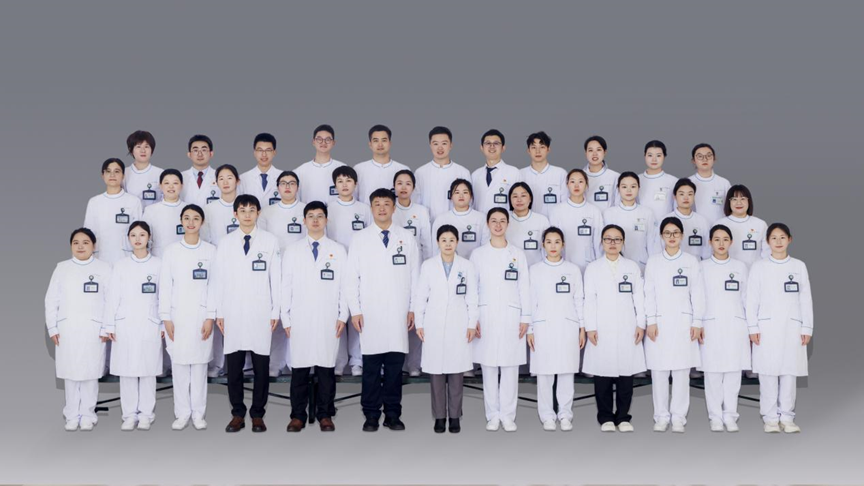
1. History
Established in 2008, the Department of Critical Care Medicine hasdeveloped into a leading center for integrated traditional Chinese and Westernmedicine in critical care.
2. Honors & Accreditations
The department holds multiple prestigious designations andleadership roles in professional societies:
Government Designations:
Key ClinicalTCM Specialty Construction Unit, 14th Five-Year Plan of Guangdong Province
Shenzhen TCMCharacteristic Specialty
Academic Leadership Roles:
StandingCommittee Member, Chinese Alliance of TCM Critical Care Medicine
Vice-ChairmanUnit, Critical Care Medicine Professional Committee, Guangdong Association ofTraditional Chinese Medicine
Chairman Unit,Critical Care Medicine Professional Committee, Shenzhen Association ofTraditional Chinese Medicine
Vice-ChairmanUnit, Critical Care Medicine Professional Committee, Shenzhen MedicalAssociation
Vice-PresidentUnit, Critical Care Medicine Professional Committee, Shenzhen Medical DoctorAssociation
3. Leadership
Prof. ZhangZhong — Founding Administrative Director (made outstanding contributions todepartmental development)
Prof. WangLing — Current Director
4. Clinical Scope & Research
The department specializes in the integrated TCM-Western medicinediagnosis, treatment, research, and education of acute and critical illnesses,with particular expertise in:
Sepsis
Respiratoryfailure
Heart failure(TCM: Xinshuai, 心衰病)
5. Clinical Operations & Capacity
Facilities:
Futian Campus:18 beds
GuangmingCampus: 23 beds
2 generalinternal medicine clinics
Medical Team (40+ members):
1 ShenzhenFamous TCM Doctor
4 Master'sSupervisors
5 Senior-LevelProfessionals (Chief/Associate Chief Physicians)
3 OutstandingTCM Talents, Pengcheng Qihuang Project, Shenzhen
1 YoungMedical Talent, Shenzhen Elite Talent Training Program
8National/Provincial Specialist Nurses
1 NationalBackbone TCM Nursing Practitioner
Academic Collaboration:
In 2025, under Shenzhen's "Three Famous" Medical Project(Famous Doctors, Hospitals, and Clinics), the department partnered with Prof.Liu Qingquan's TCM Acute & Critical Care Team from Beijing Hospital ofTraditional Chinese Medicine, Capital Medical University. The collaborationestablished the "Famous TCM Doctor Liu Qingquan Experience InheritanceStudio" — honoring Prof. Liu as a Changjiang Scholar and Qihuang Scholar.
6. Core Technologies & Clinical Capabilities
As the hospital's comprehensive rescue and perioperative supportcenter for all critically ill patients, the department has established acomplete critical care rescue system and offers:
Advanced Life Support:
ExtracorporealMembrane Oxygenation (ECMO) — with a mature, dedicated ECMO teamachieving a successful weaning rate exceeding 50% in recent years
MechanicalVentilation
Multi-ModalBlood Purification (CRRT, plasmapheresis, etc.)
BedsideTemporary Cardiac Pacing
PercutaneousTracheostomy
Monitoring & Diagnostics:
Critical CareUltrasound — serving as the core of integrated hemodynamic monitoring andrespiratory mechanics monitoring
HemodynamicMonitoring (invasive and non-invasive)
BispectralIndex (BIS) Monitoring
These technologies form a visualized, integrated diagnostic andtreatment platform that enables comprehensive, real-time patient assessment.
7. TCM Integration & Characteristic Therapies
Philosophy: "Upholding Orthodoxy while EmbracingInnovation; Equal Emphasis on Chinese and Western Medicine" (守正创新,中西并重)
The department applies TCM theory to guide critical care practice,highlighting TCM's unique advantages in acute and critical illness managementthrough the inheritance, innovation, and development of TCM diagnostic andtherapeutic techniques.
Three Dominant TCM Disease Categories:
Fever (发热)
Dyspnea Syndrome (喘证)
Heart Failure (心衰病)
Proprietary Acupoint Plastering Formulations:
DingchuanJiufei San (定喘救肺散, Asthma-Relieving and Lung-Rescuing Powder)
Wenyang JiuxinSan (温阳救心散, Yang-Warming and Heart-Rescuing Powder)
Jiedu TuireSan (解毒退热散, Toxin-Removing and Fever-Reducing Powder)
Consensus Herbal Prescriptions:
BaoyuanDecoction (保元汤, Qi-Preserving Decoction)
WenyangTongxia Decoction (温阳通下方, Yang-Warming and Purgation Decoction)
Houpu MahuangDecoction (厚朴麻黄汤, Magnolia Bark and Ephedra Decoction)
TCM Characteristic Therapies: 10+ modalities, integrating herbalmedicine with acupuncture, acupoint stimulation, and other TCM appropriatetechniques.
8. Vision & Mission
"Mastering the essence of Qi-Huang to rescue the criticallyill;
With benevolent hearts and skilled hands, safeguarding health andwell-being."
Future Goal: To build a high-level regional TCM Critical CareMedicine Center.
Strategic Priorities:
Deepen the synergistic development of medical care, education, andresearch
Take modern critical care technology as the core, integrating thestrengths of TCM syndrome differentiation and treatment
Practice thebenevolence of medicine, building a rapid-response, whole-course guardianship,accountable, and compassionate critical care medical service system