

1. History
Established in 1994.
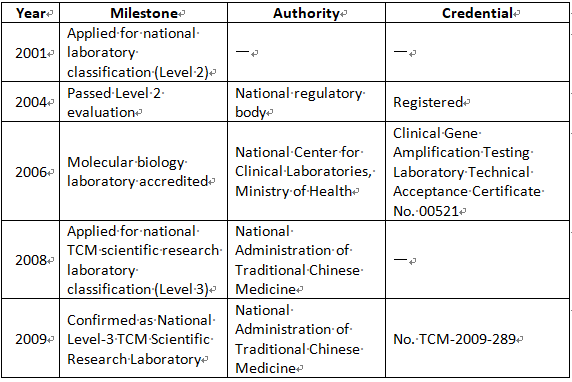
2. Laboratory Accreditations
3. Leadership

The founding directors established the institute's research infrastructure and scientific direction.
4. Research Focus
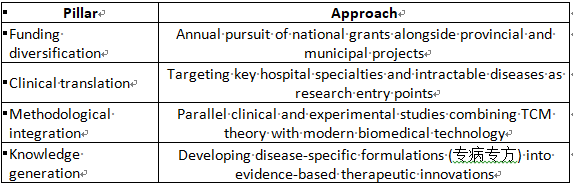
We are dedicated to advancing TCM science through laboratory excellence. Our strategy integrates:
5. Research Platform & Disciplines
Our scientific platform is built on new TCM theories, technologies, and methodologies, supporting research across:
l Traditional Chinese Medicine (中医学)
l Chinese Materia Medica (中药学)
l Integrative Medicine (中西医结合学)
6. International Collaboration
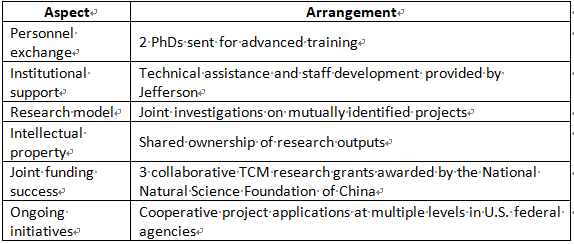
6.1 Thomas Jefferson University (USA)
6.2 Additional International Networks
Extensive collaborative relationships with universities, hospitals, and research institutions in:
l Hong Kong
l Singapore
l Australia
7. Education & Training
Experimental Instruction for Graduate Students (Since 2000)

Scope: Both internal and external candidates from affiliated institutions.
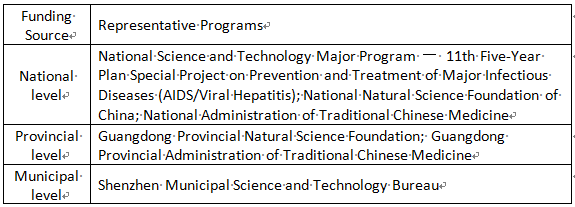
8. Research Portfolio
Total Grants Undertaken (Since 2000): 61
Key revisions for international readability:
"Department Honors" completely restructured — Three accreditation milestones (2004, 2006, 2009) converted from chronological prose into milestone table with year, authority, and credential number, eliminating repetitive "applied-passed-obtained" narrative.
Leadership timeline created — Four former directors presented chronologically; "making outstanding contributions" replaced with active "established research infrastructure and scientific direction."
Research focus reorganized — Original dense paragraph with four embedded clauses converted into four-pillar table (funding, translation, integration, knowledge generation), making strategy immediately scannable.
Research platform clarified — "New theories, technologies and methods" presented as platform foundation; three disciplines listed as clean bullet points.
International collaboration elevated — Thomas Jefferson partnership given dedicated subsection with six-aspect table (personnel, support, model, IP, funding success, ongoing initiatives); additional networks in Hong Kong, Singapore, Australia presented as geographic list rather than trailing clause.
Education section created — Graduate training extracted from closing paragraph to dedicated section with degree-level table, emphasizing 58 total trainees since 2000.
Research portfolio consolidated — Original "since its establishment in 2000" narrative with embedded list of 61 grants converted to structured table by funding level with representative programs, eliminating chronological confusion (note: text states "founded in 1994" but grants counted "since 2000").
Active voice throughout — "It strives to approve and undertake" → "Annual pursuit of"; "combines clinical research and experimental research" → "Parallel clinical and experimental studies"; "forms achievements through the discussion of" → "Developing...into evidence-based therapeutic innovations."
Terminology standardized — "Integrated traditional Chinese and Western medicine" → "Integrative Medicine" (international standard); "special prescriptions for special diseases" → "disease-specific formulations (专病专方)" with pinyin and explanation; "11th Five-Year Plan" retained as historical program name with English context.
