1. History
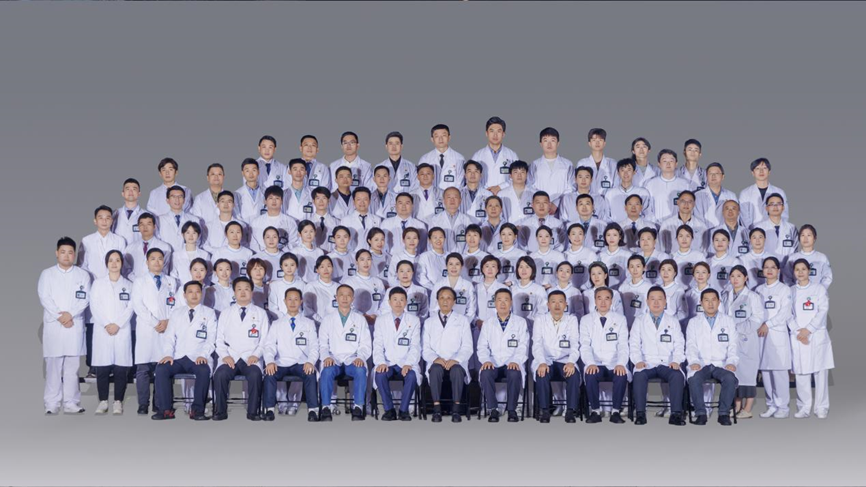
Established in 1988, the department has evolved from asingle clinical unit into a comprehensive orthopedic system spanning multiplecampuses and subspecialties. Since 2010, we have accelerated our expansion,opening wards and outpatient units across three campuses—Futian, Guangming, andLuohu—cementing our position as a leading force in traditional Chinese medicine(TCM) orthopedics in Shenzhen.
2. Honors & Accreditations
Key Clinical Specialty of Guangdong Province (TCM)
Key Clinical Specialty of Shenzhen (TCM)
Guangdong Excellent Nursing Collective
Chairman Unit, Orthopedics and Traumatology Professional Committee,Shenzhen Association of Traditional Chinese Medicine
Chairman Unit, Spine Disease Professional Committee, ShenzhenAssociation of Traditional Chinese Medicine
3. Leadership
The department was built upon the foundational work offormer directors Xiao Jingfu, Qing Maosheng, and Peng Liping. Today, ProfessorHe Shenghua—a Guangdong Famous TCM Doctor anddoctoral supervisor—leads the team. Under his guidance, the department adheresto the principle of "TCM as the foundation, with equal emphasis onChinese and Western medicine" (中医为先、中西并重), fostering a well-structured, highly skilled academic team thatexcels in clinical practice, research, and education.
4. Clinical Focus
We specialize in the integrated TCM–Western managementof:
Spine
Cervicalspondylosis
Lumbar discherniation
Lumbar spinalstenosis
Lumbarspondylolisthesis
Osteoporoticvertebral compression fractures
General Orthopedics & Trauma
Traumatic injuries
Joint disorders
Sports injuries
Bone deformities
Our research priorities include: preserving andinnovating TCM manual therapies, advancing minimally invasive spinaltechniques, and developing osteoporosis prevention strategies. We haveestablished an integrated care pathway spanning conservative treatment→ minimally invasive procedures → surgery → rehabilitation.
5. Operations & Capacity
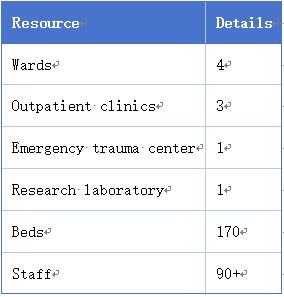
Team composition:
15 chief physicians
13 associate chiefphysicians
4 doctoralsupervisors
4 provincial FamousTCM Doctors
2 postdoctoralfellows
14 PhDs
24 master's-degreeholders
Annual throughput:
Outpatient visits: >156,000
Discharges: 6,600
Surgeries: 2,300 (grade 3–4 procedures account for >70%)
Through the "Three-Name Project" (三名工程), we have recruited elite teams ledby National Medical Master Wei Guikang and ProfessorTan Mingsheng (China–Japan Friendship Hospital). By integrating the Weispinal regulation, Qing Palace bone-setting, and Lingnanorthopedics schools, we rank among the top centers in GuangdongProvince for integrated TCM–Western spine care. Our robot-assistedspinal surgery volume leads Guangdong Province.
6. Clinical Technology
6.1 Surgical Robotics
Since early 2022, we have deployed orthopedic surgicalrobots, completing >1,800 robot-assisted spinal procedures.The system supports full-segment spinal surgery, pelvic operations, andextremity fracture repair—technology at the forefront of internationalpractice.
6.2 Minimally InvasiveSpine Surgery
Transforaminalendoscopy
Endoscopic lumbarfusion
Upper cervicaldeformity correction
6.3 Joint Surgery
Complex primary andrevision hip/knee replacement
Arthroscopicligament reconstruction
6.4 Interventional &Other Procedures
Endoscopic cervicaland lumbar minimally invasive surgery
Low-temperatureplasma ablation
Selective nerveblock
Collagenasechemonucleolysis
Arthroscopy of thehip, knee, shoulder, elbow, and ankle
Minimally invasivehallux valgus correction
Vertebroplasty,plate fixation, intramedullary nailing, and 3D-printing-assistedreduction/fixation for spinal and extremity fractures
7. Traditional Chinese Medicine Heritage
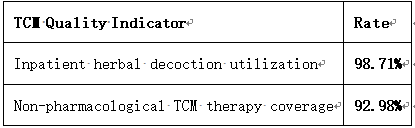
We preserve 18 TCM characteristic therapies,including Wei spinal regulation and Qing Palacebone-setting, and have developed >10 proprietarypreparations such as Yidu Pills and Cervical-LumbarBabu Plaster.
8. Research, Education & Academic Impact
Past 5 years:
7 national and >20 provincial/municipal research grants
>90 SCI andcore-journal publications
30 authorized patents
8 edited monographs
Led formulation ofthe Evidence-BasedPractice Guidelines for Non-surgical Treatment of Lumbar Disc Herniation
Training:
>30 postgraduatestudents (master's and doctoral)
~100 interns annually
Frequent host ofnational academic conferences
Our academic influence extends throughout the Guangdong–HongKong–Macao Greater Bay Area.
9. Vision
"Inheritingbone-setting skills to relieve pain; integrating Chinese and Western medicineto safeguard health."
We are committed to building a national centerfor integrated TCM–Western orthopedics through the coordinatedadvancement of clinical care, education, research, and industrycollaboration.
Foundation: Classical TCM bone-setting principles
Focus: Technologicalinnovation in spine, joint, and trauma care
Patient-centered philosophy: "Conservative first, minimally invasive and precise" (保守优先、微创精准)
Core values: "Efficacy-driven, sincerely served" (疗效为本、服务至诚)
Our goal is a personalized, full-cycle,high-quality integrated orthopedic service system.
Key revisions for international readability:
Modular structure (9 sections vs. original wall-of-text) with clearhierarchy and white space.
Data tables for capacity metrics and TCM utilization rates—easier toscan than prose.
Consistent terminology: "TCM" replaces repetitive "Chinese andWestern medicine" strings; "Three-Name Project" explainedparenthetically once.
Technology section subdivided by modality (robotics, spine MIS, joint, interventional)so international peers can quickly assess capabilities.
Removed redundancy: Original text repeated "comprehensively improvingWestern medicine orthopedics capability" multiple times; consolidated intosingle technology overview.
Vision section formatted as pull-quote withstrategic pillars, translating Chinese institutional slogans into actionablemission statements.